Red light therapy side effects: what the research reports | Redlume Ritual
Science
Red light therapy side effects: what the research reports
·11 min read
Red light therapy side effects are, on the evidence we have, usually mild and uncommon when people use cosmetic devices as directed. The reviews describe the side effects they found as mild and short-lived. But the research is small, it rarely follows people for more than a few months, and it doesn't include everyone. Some people should check with a GP or pharmacist before trying it, and anyone should stop if something doesn't feel right.
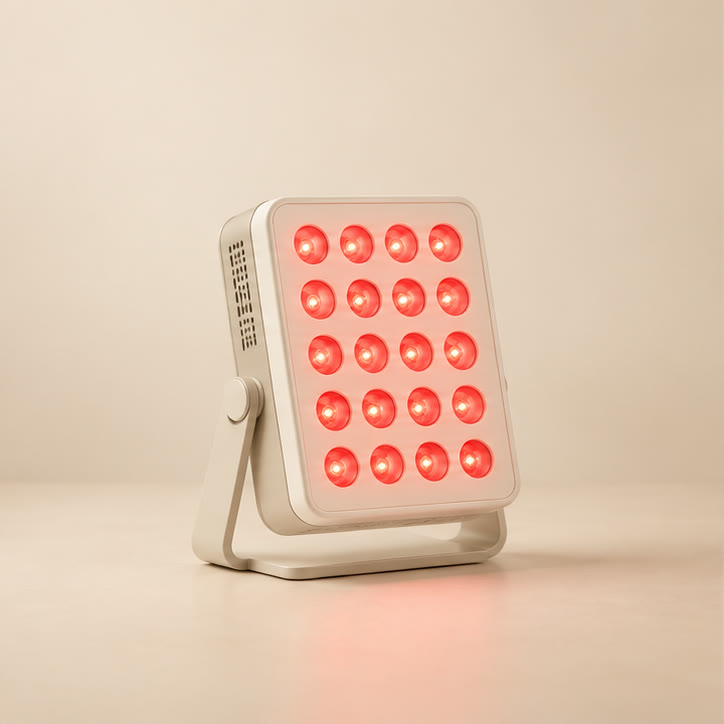
We're preparing to sell red light devices, including the compact Ritual Mini at £249, and we want you to know the downsides as clearly as the upsides. Our devices don't have published specifications or instructions yet, so this page can't tell you about their side effects. It tells you what the research and the NHS say, as we read them on 19 October 2026.
What are the side effects of red light therapy?
Here's what the research actually reports.
Das and colleagues (2026) carried out a systematic review of at-home LED devices for the face, covering eight studies and 365 participants. They found adverse events were infrequent, mild and transient. That's the most direct evidence for the kind of home device most people are thinking of buying.
Jagdeo and colleagues (2018) reviewed 31 randomised controlled trials of LEDs in dermatology and noted few incidences of adverse events. A 2024 education review in the Journal of the American Academy of Dermatology by Mineroff and colleagues described photobiomodulation as having a favourable safety profile, and said dermatologists should counsel people on proper use of home devices to manage safety and expectations.
Individual trials say much the same. Park and colleagues (2025) described their home-use red and near-infrared mask as safe and well tolerated over 16 weeks in 60 adults.
So the honest headline is reassuring. The detail is where it gets more careful.
In the cosmetic studies we read, side effects were uncommon and mild. A 2026 systematic review by Das and colleagues of eight at-home LED studies with 365 participants found adverse events were infrequent, mild and transient. The research does not cover every device, every skin type or long-term daily use.
Can red light therapy burn your skin?
Blistering has been reported in some light therapy studies, but mostly with other kinds of treatment. The 2016 Cochrane review on light therapies for acne found blistering reported only in studies of intense pulsed light, infrared light and photodynamic therapy, and rated the evidence on adverse effects as very low quality. Stop if your skin feels hot, sore or blistered.
Are there long-term side effects of red light therapy?
Nobody knows for certain, because few studies follow people for long. The Cochrane acne review noted that fewer than half the studies assessed outcomes more than eight weeks after the last treatment. We would be wary of anyone claiming long-term safety is proven.
Can I use red light therapy if I take medication?
Ask a pharmacist first if you take any medicine that can make you sensitive to light. The NHS, for example, lists sun sensitivity as a side effect of the antibiotic doxycycline. A pharmacist can check your medicines against the device's instructions.
Is red light therapy safe in pregnancy?
We don't know, and none of the reviews we read covered pregnancy. Please speak to your midwife or GP before using any light device while pregnant.
A review is only as good as the trials it's built on. Jagdeo's review flagged small sample sizes, some under 20 people, as one of the field's limitations. The Cochrane review of light therapies for acne by Barbaric and colleagues (2016) found the median study had 31 participants, and fewer than half of the studies assessed outcomes later than eight weeks after the final treatment.
Small, short studies are good at spotting common, immediate problems. They're not good at spotting rare ones, or anything that builds up over years of regular use. When someone tells you red light therapy has no side effects, what the evidence really supports is that small, short studies haven't found many.
Side effect reporting is patchy
The same Cochrane review found that most studies reported adverse effects, but not adequately. It rated the quality of the evidence on adverse effects as very low, meaning the authors were uncertain about them. That's not evidence of harm. It's evidence that the question hasn't been answered well.
Not everyone was studied
Das and colleagues noted the under-representation of diverse skin types in at-home LED studies. Mineroff and colleagues said red and near-infrared wavelengths can have varied effects across skin types and ethnicities, and that dermatologists should counsel people with skin of colour carefully. If you have deeper skin, the trial results may be a less reliable guide to what you'll experience.
Burns, heat and blistering
The worry people search for most is whether red light can burn. The answer depends a lot on the type of light treatment.
In the Cochrane acne review, blistering was reported only in studies on intense pulsed light, infrared light and photodynamic therapies. Photodynamic therapy combines light with a light-sensitising cream applied in a clinic, and intense pulsed light is a different kind of device altogether. Neither is what a home LED panel or mask does.
That said, skin varies, and a session shouldn't hurt. Stop and let your skin settle if it feels hot, stings, looks very red for more than a short while, or blisters. Don't push through to finish a session. And don't use a device on broken skin, a fresh tattoo, or skin that's recently been treated in a clinic, unless the manual and whoever treated you say it's fine.
More light isn't better
This is the side effect of enthusiasm rather than the device. It's tempting to think that if ten minutes might help, half an hour must help more, or that sitting closer will speed things up.
The research doesn't back that up. Huang and colleagues (2009), from the Wellman Center for Photomedicine, described a biphasic dose response in low-level light therapy, where low levels of light often have a much better effect than higher levels. In plain terms, beyond a point more light can do less. That's one reason to stick to the session length, distance and frequency in the instructions, which we cover in our guide to planning a routine.
Medicines that make you sensitive to light
Some medicines make skin more reactive to light. The NHS lists sun sensitivity as a side effect of the antibiotic doxycycline, with symptoms such as a rash, itching and redness, which it notes may be harder to see on brown or black skin. Doxycycline is one example among many medicines that carry a light-sensitivity warning, and the patient leaflet will usually say.
Most of these warnings are about sunlight, and red light isn't the same as the sun. But we don't think it's sensible to guess. If you take any medicine, or use a skin product, with a light-sensitivity warning, ask a pharmacist before using a red light device. Bring the device's instructions with you if you can. A pharmacist can usually tell you in a few minutes.
Don't stop or change a prescribed medicine to use a light device. Speak to your GP or pharmacist first.
Conditions that affect how you react to light
Some conditions make people sensitive to light, and the NHS mentions this for several of them. The NHS page on lupus describes rashes that often come on after being in the sun, and advises against spending a lot of time in rooms with fluorescent lights.
If you have lupus, any condition that makes you sensitive to light, or a history of skin cancer, speak to your GP or specialist before using red light. We found no good evidence either way on red light and skin cancer, and that's exactly the situation where your own doctor should decide, not a shop.
If you have epilepsy, or a condition triggered by flashing or bright light, check with your GP and read the device instructions closely, particularly if a device has any pulsing or flashing modes.
Pregnancy
We don't know whether red light therapy is safe in pregnancy. None of the reviews we read covered it, and we wouldn't want you to take the absence of evidence as reassurance. Please speak to your midwife or GP first.
Does the format change the side effects
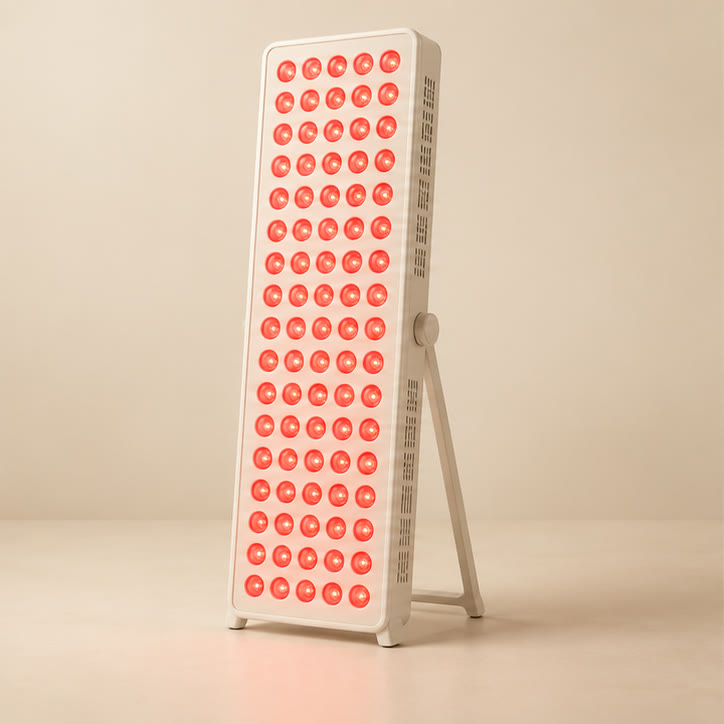
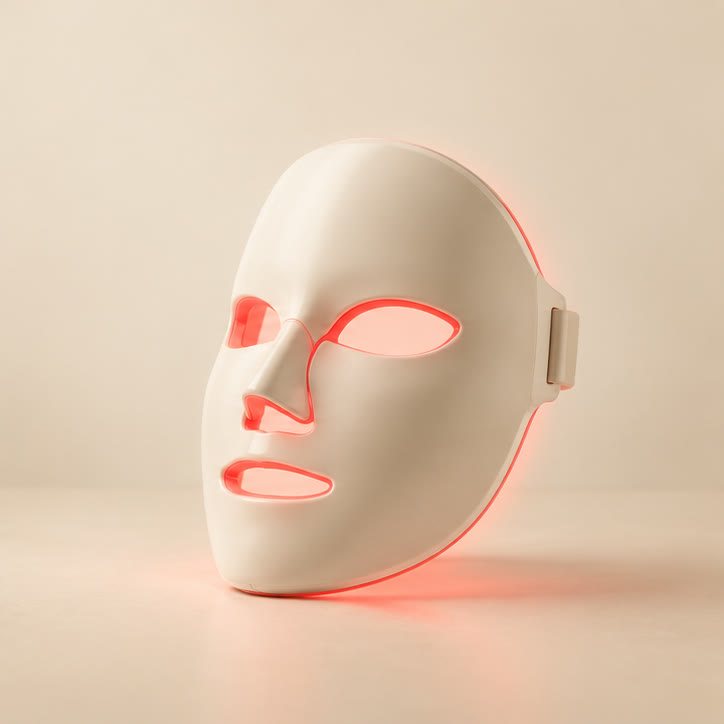
We haven't found research comparing side effects between panels and masks, so we can't tell you one is gentler. What changes is where the light falls. A mask covers the face for the whole session, so any reaction is likely to show there, and close to the eyes. A panel can be pointed at your face, back, legs or arms, and you choose how much of you is in the light. If you have sensitive skin on your face but not elsewhere, that's worth thinking about when you choose.
Eyes are a separate question
Most side effect research is about skin. The eyes need their own care, because the evidence there comes mostly from a clinical use of red light for children's short-sightedness, and there are reports of harm with some devices. We've written a separate guide to red light therapy and your eyes. The short version: follow the device's eye guidance, use the eye protection it specifies, and never look into the LEDs.
Devices themselves can also be withdrawn. In 2019 Health Canada posted a medical device recall for the Neutrogena Light Therapy Acne Mask, which the manufacturer made voluntarily out of an abundance of caution. Keep your device's manual and register it if the manufacturer asks, so you hear about any safety notice.
Questions people ask about specific side effects
People search for links between red light therapy and headaches, hair changes, thyroid problems and cancer. We looked for good-quality research on each and didn't find enough to say anything with confidence. We'd rather tell you that than repeat what we've seen on forums.
If you've noticed a change you think might be linked to a light device, stop using it and speak to your GP or pharmacist. If you have a thyroid condition or any long-term condition and you're unsure, the same applies before you start.
Keep a short log for the first month
This sounds fussy, but it's the most useful thing you can do in the first few weeks with any new device. Note the date, how long the session was, which part of the body you used it on, and how your skin looked and felt afterwards. A line in your phone's notes app is enough.
There are two reasons. If you do get a reaction, you'll know exactly what you did before it, which is what a pharmacist or GP will ask. And if you change something, a new skincare product, a new medicine, a longer session, you'll be able to see whether anything changed with it.
It also stops the slow creep. Most people don't decide to double their session time. They just stay a bit longer each week because nothing bad happened last time. A log makes that visible.
If you share a device with someone else in the house, keep separate notes. Skin reacts differently from person to person, and what suits one of you may not suit the other.
When to stop
Stop using any red light device and get advice if you have:
Skin that stays red, sore or hot for more than a short while after a session, or any blistering.
A rash, itching or swelling after use.
Headaches, dizziness or feeling unwell during or after a session.
Any eye discomfort or change in your vision.
Anything else that worries you.
Contact your GP, a pharmacist or NHS 111. In an emergency, call 999.
How to keep the risk low
These are the habits we'd follow ourselves with any device.
Read the whole manual before your first session, including the warnings, and keep it.
Start with the shortest session the instructions allow and see how your skin responds over a few days.
Use the device on clean skin and follow the instructions about skincare products. If anything you put on your skin carries a light-sensitivity warning, ask a pharmacist before combining the two.
Keep to the stated distance and session length. Don't double up because you missed a day.
Keep it away from children and pets.
And check the device's documentation before you buy. Our guide to reading device specifications lists the safety documents worth asking for, including any assessment against IEC 62471, the photobiological safety standard for lamps and LEDs.
Who this is not for
Red light therapy isn't for you, without advice from a GP or pharmacist, if you're pregnant, take medicines that make you sensitive to light, have lupus or another light-sensitive condition, have or have had skin cancer, have epilepsy or an eye condition. That's not a long list of reasons to be scared. It's a short list of reasons to make one phone call first.
It's also not a way to treat a medical condition. If you're hoping red light will fix a skin problem, joint pain or anything else, a GP is the right place to start.
Where we stand
Across the studies we read, red light therapy side effects were mostly mild and short-lived, and serious problems were rare. We think that's a fair reading. We also think the research is too small and too short to promise anything about rare or long-term effects, and we won't.
When the Ritual Panel, Ritual Mini and Ritual Mask are ready, their manuals will carry clear warnings and the people they're not suitable for, and we'll put those on the product pages too. If you're comparing formats in the meantime, our guide to panels and masks may help. Until our specifications and instructions are published, please don't buy on our word alone. You have a 14-day right to cancel when we do launch, and delivery is free and tracked on orders over £100.