Loading…
Give the device a fixed home where it's ready to use, tie your sessions to something you already do every day, and follow the manufacturer's instructions on session length, distance and frequency exactly. Make eye protection and a quick wipe-down part of every session rather than an extra step. Tick off each session somewhere you'll see it. And know in advance what would make you stop and ask a GP or pharmacist.
That's the short version of planning a red light therapy routine. Most of it is about the boring parts, because the boring parts are what decide if you're still using a device in three months.
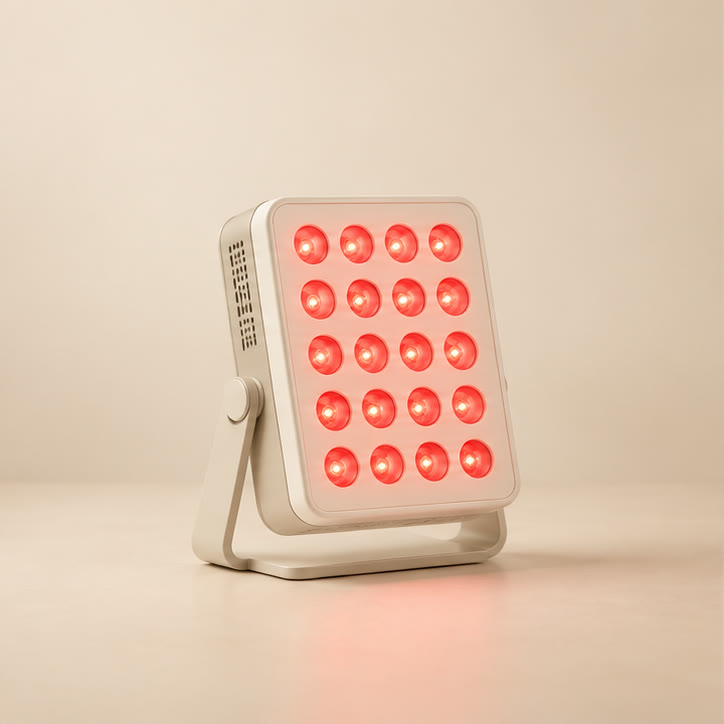
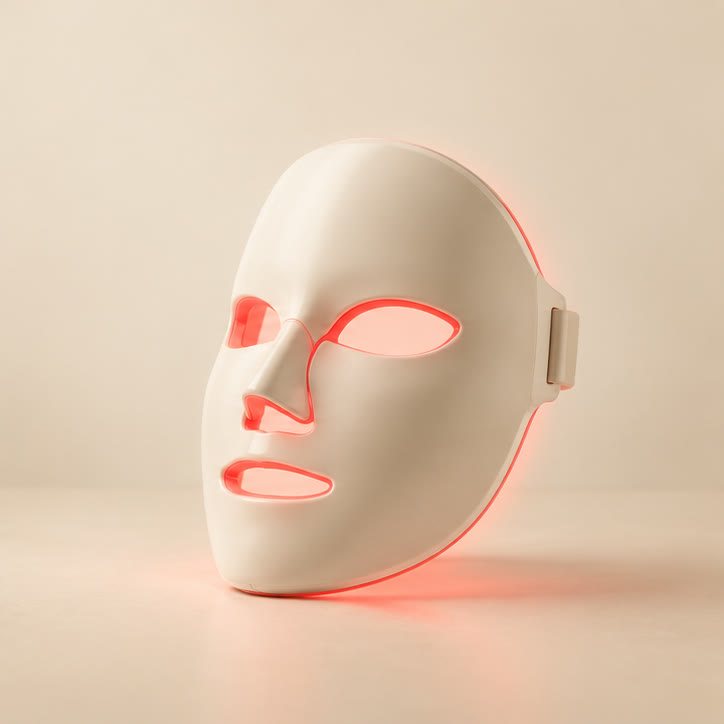
We'll be using our own range as the examples. The Ritual Mini is a compact panel at £249, the Ritual Panel is the full-size panel at £599, and the Ritual Mask is an LED face mask at £199. Their specifications and instructions aren't confirmed yet, so this page can't tell you how long or how often to use any of them. When the manuals are final, they'll say, and you should follow them over anything here.
Every trial that found something for the look of skin asked people to keep going for weeks. Our page asking whether red light therapy is worth it goes through the time involved. The short of it is that a device used twice and left in a drawer has done nothing for anyone.
Habits take a while to form. Singh and colleagues (2024) pulled together 20 studies with 2,601 participants on forming health habits like flossing, drinking water and physical activity. In the four studies that reported it, the median time to form a habit was 59 to 66 days, and individual times ranged from 4 to 335 days. So expect the first two months to need some effort. That's normal, not a sign you're doing it wrong.
The single biggest thing you can do is decide where the device lives before it arrives.
A device you have to dig out, unwrap and set up each time is a device you'll skip. One that sits ready, plugged in, at the right spot, is one you'll use. If you can, pick somewhere you already pass every day: the bedroom corner where you get dressed, the chair where you read in the evening.
For a panel, that spot needs a stable surface or the mount the manufacturer specifies, room for you at the distance the instructions give, and a socket within easy reach. Our guide to choosing a format covers measuring up for each one.
For a mask, you need a clean place to keep it between sessions and somewhere comfortable to sit or lie back while it's on. A drawer by the bed or a shelf in the living room both work. Keep the cable or charger with it.
Check the manual before you choose a room. Some rooms are poor choices for electrical devices, and the instructions should say where the device can and can't be used. If it's silent on damp rooms or use near water, ask the seller before you put it in a bathroom.
Don't try to find a new slot in your day. Borrow one that's already there.
The idea is to hang the new habit on an old one. After you clean your teeth at night. While the kettle boils on a Saturday morning. Straight after you get back from a run. The old habit becomes the cue for the new one.
There's some support for being thoughtful about timing. In the Singh 2024 review, morning practices and habits people picked themselves generally showed greater habit strength. That's research on forming habits in general, not on light devices. We're not aware of any evidence that one time of day gives a better result from red light, so choose the time you're most likely to stick to.
If you already have a skincare routine, a mask often fits naturally beside it. Check the manual for what it says about using products on your skin before or after a session, and follow that.
This is the part we'd ask you not to improvise.
Session length, distance and frequency are specific to each device, because they depend on how much light that device puts out. Jenkins and Carroll (2011) list irradiation time, number of treatments and interval between treatments among the eight most important parameters to report in light studies. Put simply, how long and how often you use a device is part of the dose. A schedule from a different product, a video or a friend's device doesn't transfer.
More isn't better either. Huang and colleagues (2009) described a biphasic dose response in low-level light therapy, where low levels of light often had a much better effect than higher levels. Staying longer, sitting closer or adding extra sessions isn't a shortcut. Our page on side effects has more on why.
It's also worth knowing that more sessions didn't always add anything in research. Bragato and colleagues (2025) compared two and three sessions a week with a red mask over four weeks and concluded that two weekly sessions seemed sufficient for patient satisfaction. That was one device in one trial. It's a reason not to overdo things, not a schedule for your device.
With a panel, the distance in the instructions is part of the session. So set up the space so that sitting at that distance is the natural thing to do.
Put a chair in the right spot and leave it there. Mark the floor with a small strip of tape if you stand. If the panel is on a stand, note the height setting that puts the light where you want it, so you're not fiddling every time. Use a timer, on the device or your phone, so you're not leaning in to check how long is left.
With a mask, distance is built in by the design, so the work is fit. Get the fastening right once and leave it adjusted.
The instructions should tell you whether to close your eyes, whether goggles or shields come with the device, and whether to use them. Do what they say, every session. The manufacturer's eye guidance should follow from the device's photobiological safety assessment, often against IEC 62471, the international standard for the photobiological safety of lamps and lamp systems.
Habits help here as much as anywhere. Keep the goggles with the device so you can't start a session without picking them up. Close your eyes before switching on. Our page on red light therapy and your eyes goes into this properly.
A device you share a face with needs looking after.
Follow the manufacturer's cleaning instructions, because the wrong product can damage plastics, coatings or the LED surface. As a rule of thumb, switch off and unplug before cleaning, let the device cool if it's warm, and let it dry before you put it away or use it again.
A mask touches skin, so it'll need wiping after use. A panel doesn't touch you, but it gathers dust, and dust sits on the LEDs. A quick wipe once a week, or whatever the manual says, is enough.
Check the device now and then. Look at the cable and the plug, the casing and the controller. If you see a crack, a frayed cable, scorch marks or anything that worries you, stop using it and contact the seller. If you think a product is unsafe, the Office for Product Safety and Standards says to contact the Citizens Advice consumer helpline in England and Wales, the Advice Direct Scotland consumer helpline in Scotland, or your local district council in Northern Ireland.
The most useful thing to track is whether you did the session. A tick on a wall calendar, a note on your phone or a habit app all work. Keep it next to where the device lives if you can.
What you're watching for is the pattern. Two weeks in a row with gaps on Thursdays tells you Thursday isn't working, so move it. That's easier to fix than "I've sort of stopped".
If you want to note more than a tick, jot down the date, the length of the session and the area you used it on. Our side effects page explains why a short log is worth keeping in the first month, especially if you get a reaction.
Try not to judge results week by week. The trials ran for weeks to months, and changes in how skin looks are slow and easy to misjudge in a bathroom mirror. If you want a comparison, take a photo in the same spot, at the same time of day, with the same light, at the start and every few weeks after. Then leave it alone in between.
You'll miss sessions. Everyone does.
If you miss one, pick up with your next planned session. Don't double up, and don't make the next one longer to make up for it, unless the instructions tell you to. That's the same reason more isn't better above.
If you're going away, decide in advance whether the device comes with you. A mask travels more easily than a panel. If it stays at home, that's fine. Restart when you're back, on your usual day.
If you're ill, especially with anything affecting your skin or eyes, take a break and check with a GP or pharmacist before restarting.
If someone else in the house wants to use the device, each of you should read the instructions yourselves, including who shouldn't use it.
Clean a mask between people. Keep your own tick sheets, because what suits one of you may not suit the other. And if one of you takes a medicine that makes skin sensitive to light, or has an eye or skin condition, that person should check with a pharmacist or GP before using it at all.
Decide now what would make you stop, so you don't talk yourself out of it later.
Stop and speak to a GP or pharmacist if your skin stays red, sore or hot after a session, or you get a rash, itching, swelling or blistering. Do the same if you get headaches, dizziness or eye discomfort, or notice any change in your vision. For sudden changes in vision, contact NHS 111 or an urgent eye service, and in an emergency call 999.
Check before carrying on if you start a new medicine, because some can make skin more sensitive to light (our side effects page gives an example), or if you become pregnant, are diagnosed with a condition affecting your skin or eyes, or are told you have a condition triggered by light. A pharmacist is often the quickest person to ask.
If your device is sold as a medical device and you think it has caused a problem, the MHRA's Yellow Card scheme lets anyone report an issue with a medical device. For other consumer products, use the product safety route above.
Under regulation 30 of the Consumer Contracts Regulations 2013, for most goods bought online, the cancellation period ends 14 days after the day the goods come into your physical possession. Every order from us carries the UK and EU 14-day right to cancel.
Fourteen days won't tell you anything about results. But it's plenty to find out whether the routine works. Does the device fit where you planned? Is the setup quick enough that you'll do it on a tired evening? Do the instructions make sense? If the answer to those is no, that's useful to know while you can still send it back.
This guide is about the practical side of using a device at home. It isn't treatment advice, and a routine with any device isn't a promise of a result.
If you're hoping to treat a skin condition, an eye condition or anything else medical, see a GP or pharmacist instead. If you're pregnant, have epilepsy or a condition triggered by light, have an eye condition, or take a medicine that makes you sensitive to light, get advice before you start any light routine.
We'd choose the device's home before it arrived, and pick a time we already have every day. We'd read the manual properly, follow its session length, distance and frequency exactly, and keep the eye protection with the device. We'd tick off each session for the first two months and not judge anything for at least as long as the trials ran.
If you want a panel that's easy to put away, the Ritual Mini is £249. If you'd like a face device alongside it, The Starter Ritual pairs the Mini with the Ritual Mask for £429, saving £19. Delivery is free and tracked on orders over £100.
As often as your device's instructions say, and no more. Session length, distance and frequency are specific to each device. Jenkins and Carroll (2011) list the number of treatments and the interval between them among the key parameters of a light dose, so frequency is part of the dose, not a free choice.
We don't know of research showing that one time of day gives a better result from red light. For keeping a routine going, a 2024 review of habit research by Singh and colleagues found morning practices and habits people chose themselves tended to be stronger. Pick a slot you already have every day.
It varies a lot. The 2024 systematic review by Singh and colleagues found median times to form health habits of 59 to 66 days in the studies that measured it, with individual times ranging from 4 to 335 days. Plan for a couple of months before it feels automatic.
Carry on with your next planned session. Don't double up or lengthen the next one to catch up, unless the manufacturer's instructions tell you to. Huang and colleagues (2009) described a biphasic dose response in light therapy, where lower levels of light often worked better than higher ones.
Stop and speak to a GP or pharmacist if your skin stays red, sore or hot, if you get a rash, blistering, headaches or any eye discomfort or change in vision, if you start a new medicine, or if you become pregnant. For sudden changes in vision, contact NHS 111 or an urgent eye service.
Red light therapy side effects as the research reports them: what is common, what is rare, medicines and conditions to check, and when to stop.
Red light therapy and your eyes: what the safety standard covers, what the eye research found, whether to close your eyes, and who should ask first.
Is red light therapy worth it? We weigh the evidence grade, the real cost per session, the time it asks of you and who should save their money.
Red light panel or LED mask? How to choose a format by the space you have, where it will sit, the areas you want to cover and the routine you will keep.