Loading…
People asking is red light therapy worth it usually want a yes or a no. For some people it's yes, and for plenty of others it's no. It's worth it if you want a cosmetic routine for the look of your skin, you're comfortable with modest results that the research hasn't fully pinned down, and you'll actually use a device a couple of times a week for months. It's not worth it if you're hoping to treat a medical condition, if you want guaranteed results, or if a device would end up in a drawer by February.
We sell red light devices, starting with the Ritual Mask at £199, so you'd expect us to say yes to everyone. We won't. This page is about the decision: what the evidence is worth, what it really costs, what it asks of you, and who should keep their money. Our device specifications aren't confirmed yet, so nothing here describes what our products will do.
Here's how we'd put it to a friend.
The evidence is real but thin. A handful of decent trials show small improvements in how skin looks. The reviews are cautiously positive and openly say more research is needed.
The cost is a one-off, and it's not small. Spread over a year of regular use it looks more reasonable, but only if you keep using it.
The time is the real price. The trials ran for weeks to months with regular sessions. If you won't commit to that, the money's wasted whatever the evidence says.
We've written about the skin studies in detail in our guide to red light therapy for skin, so here's just the grading you need for a buying decision.
The most relevant review is Das and colleagues (2026), which looked only at at-home LED devices for the face. It found eight studies with 365 participants in total. Across them, home LED use was linked with statistically significant improvements in wrinkles, texture and elasticity, with high satisfaction and mild, infrequent side effects. The authors also flagged varied protocols, little comparative data and too few people with diverse skin types, and asked for larger standardised trials.
An older review by Jagdeo and colleagues (2018) of 31 randomised trials of LEDs in dermatology was encouraging, but listed the same weaknesses: small samples, sometimes under 20 people, missing blinding and inconsistent settings.
And there's a wider caveat. Huang and colleagues (2009), writing from a leading photomedicine research centre, described low-level light therapy as remaining controversial in mainstream medicine, partly because the number of settings to choose from has produced negative studies as well as positive ones.
So if you're asking whether red light therapy works, a fair answer is that it may help skin look a little smoother or less lined, in some people, over a couple of months. That's a cosmetic benefit with low to moderate evidence behind it. Whether that's worth money is your call, but you should make it knowing the grade.
There are a few situations where we'd say save your money, or at least spend it elsewhere first.
If you're hoping to treat acne, rosacea, eczema, psoriasis or any skin condition. The Cochrane review on light therapies for acne by Barbaric and colleagues (2016), which covered 71 studies, found high-quality evidence is lacking. In the UK, a product sold to treat a medical condition has to be registered as a medical device, and the Advertising Standards Authority ruled against an LED mask advert in November 2025 for implying it could treat acne and rosacea when the mask wasn't registered with the MHRA. A GP or pharmacist can offer treatments with much better evidence.
If you're hoping it'll help pain, an injury, joints, hair loss, sleep, weight or anything else health-related. We don't make those claims and we'd point you to your GP.
If you want a guaranteed result by a date. Nobody can give you that honestly.
If you take a medicine that makes you sensitive to light, have a light-sensitive condition or an eye condition, or you're pregnant, it's not worth it until a GP or pharmacist has said it's fine for you. That's not a reason to give up on the idea, just a step to take first.
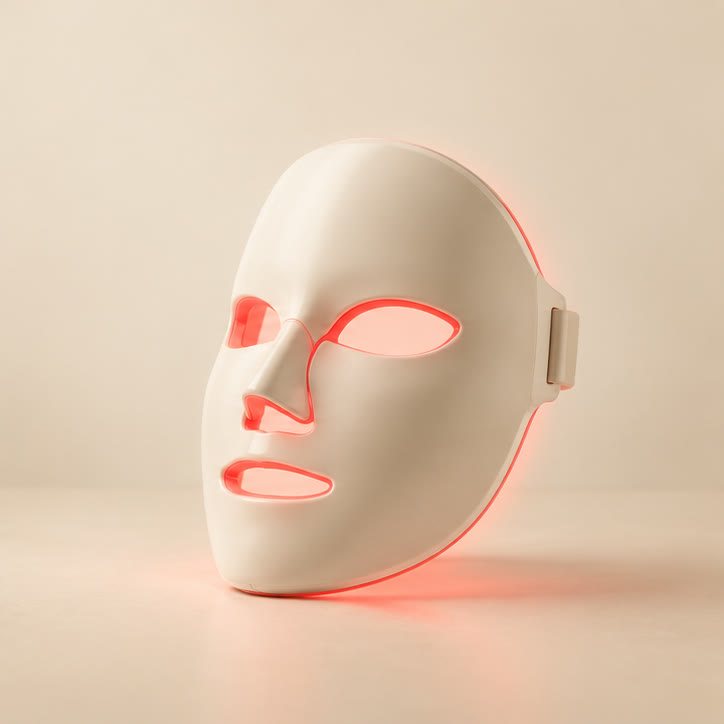
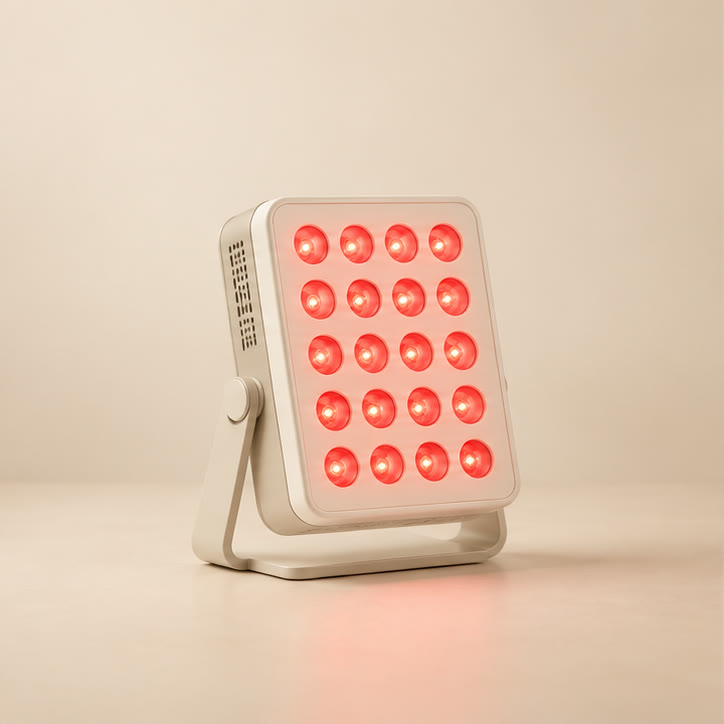
The sticker price is the obvious bit. Our prices are simple. The Ritual Mask is £199. The compact Ritual Mini is £249. The full-size Ritual Panel is £599. The Starter Ritual puts the Mini and Mask together for £429, and The Full Ritual pairs the Panel and Mask for £759. Delivery is free and tracked on orders over £100, which covers all of them.
The more useful number is the cost per session. That's not a figure from any study, just arithmetic, and it depends entirely on how much you use the device. As an example, if you used the Ritual Mask twice a week for a year, that's 104 sessions, which works out at a little under £2 a session. Use it for two years and it halves. Use it four times and give up, and each session cost you about £50.
That's the honest maths of any home device. It's only good value if it becomes a habit. Our guide to planning a routine is about exactly that, finding a spot and a time where it'll actually get used.
We haven't compared our prices with clinic sessions, because clinic prices vary a lot and we haven't checked them. If you're weighing the two, ring a couple of local clinics and ask what a course costs and how many sessions it includes, then compare that with a one-off device and how often you'd use it.
The trials that found something asked a lot of their volunteers.
Wunsch and Matuschka (2014) measured results after 30 sessions at twice a week, which is around 15 weeks. Park and colleagues (2025) assessed crow's feet at 8, 12 and 16 weeks of mask use. Bragato and colleagues (2025) ran four weeks of two or three sessions a week, and found two a week did as well as three.
So the realistic commitment, based on the research, is a couple of sessions a week for at least a month, and more like three or four months before you judge it. That's the bit to be honest with yourself about. If you already struggle to stick to a skincare routine, a device won't change that.
We'd suggest running through these before buying anything, from us or anyone.
Be specific about what you want to change. If it's a cosmetic thing like fine lines or texture, there's some evidence. If it's a condition or a health problem, see a GP first.
Picture the next three months. Twice a week, every week, is what the trials asked for. Think about where the device will live and which evenings it'll fit into.
Accept that the result may be modest. The trial improvements were measurable but not dramatic. Satisfaction was high in some trials, at 79.6% and 73.4% in the two active groups in the Bragato study, but that still leaves people who weren't satisfied.
Check it's safe for you. Medicines, light-sensitive conditions, eye conditions and pregnancy all mean a quick conversation with a pharmacist or GP first.
Know what you're buying. Wavelengths, measured output and safety assessments should be published. Our guide to reading device specifications explains what to look for.
If the middle three sit comfortably with you and the last two are sorted, it may well be worth it. If not, wait.
Prices for red light devices vary a lot, and it's natural to assume the dearer ones work better. The research doesn't let anyone say that.
What a bigger price usually buys is a bigger device. A larger panel covers more of you at once, which matters if you want light on your back or legs as well as your face. It doesn't mean stronger evidence. The trials in the Das review were all of at-home face devices, and none of the reviews we read ranked devices by price.
What a bigger price shouldn't buy is a longer list of claims. If a more expensive device comes with promises about conditions, pain or guaranteed results, that's a reason for more caution, not less.
So the question isn't which device is best. It's which one matches the area you want to use it on, has published specifications and safety documents, and fits your space and budget.
If you do buy, give yourself a fair way to judge it, because memory is useless for this.
Take a photo before your first session. Use the same spot, the same light, ideally daylight from a window, and the same time of day. No make-up. Take another every four weeks in exactly the same conditions.
Change nothing else if you can help it. Keep the same moisturiser, cleanser and sunscreen. If you start three new things in the same month, you'll never know which one made the difference.
Decide in advance when you'll judge it. Based on the trials above, around 12 weeks of regular use is a fair point. If you can't see a difference in your photos by then, it's reasonable to conclude it isn't worth it for you, and to stop.
The cheapest device you'll use is better value than the best one you won't.
If your interest is mainly the face, a mask is the simplest choice. It's the lowest price in our range and there's trial evidence specifically on masks.
If you'd like to use light on more than your face, or you don't like the idea of something on your face, a panel might be more worth it for you. The Ritual Mini at £249 is the compact option and the Ritual Panel at £599 is the full-size one. Our comparison of panels and masks covers placement, storage and fit.
If you want both, The Starter Ritual at £429 costs £19 less than the Mini and Mask bought separately. That's not a reason to buy two devices if you only need one. It's only worth it if you'd use both.
The best protection against a purchase that isn't worth it is the right to change your mind.
Under the Consumer Contracts Regulations 2013, for a straightforward online order of goods, regulation 30 says the cancellation period ends 14 days after the day the goods come into your physical possession. Our orders carry the UK and EU 14-day right to cancel. Use that time to check the device, read the manual, try it on or set it up, and make sure it suits you. Fourteen days isn't long enough to judge results, so this is about fit and practicality, not whether your skin has changed.
Before buying from anyone, check how returns work for something that touches the skin, who pays return postage, and how long a refund takes.
Red light therapy isn't worth it for anyone hoping to treat a medical condition, anyone who needs a guaranteed result, or anyone who won't use a device regularly for months. It's not suitable without advice for people who are pregnant, take light-sensitising medicines, or have light-sensitive or eye conditions.
Here's where we land. If you want a cosmetic routine, you've read what the evidence actually says, and you'll stick with it, it can be. If any of those three isn't true, you'll get more from spending the money elsewhere.
For what it's worth, the people we think will get the most from it are the ones who already have a steady skincare habit and want to add something to it, rather than the ones hoping a device will create the habit for them. We'd rather you decided which of those you are now than after buying. When our specifications are confirmed, they'll go on every product page, including the Ritual Mask. If something you need to know isn't there yet, wait until it is.
It can be, if you want a cosmetic routine, accept modest and uncertain results, and will use a device regularly for months. A 2026 systematic review by Das and colleagues found at-home LED face devices were linked with improvements in wrinkles and texture, but in only eight studies with 365 people in total. It is not worth it if you need to treat a medical condition.
It is if you buy it for the wrong reason. A 2016 Cochrane review by Barbaric and colleagues found high-quality evidence for light therapies in acne is lacking, and in the UK a product sold to treat a condition must be registered as a medical device. For the look of fine lines, the evidence is better but still small.
Give it at least as long as the trials did. Bragato and colleagues assessed after four weeks of twice- or three-times-weekly sessions, and Park and colleagues assessed at 8, 12 and 16 weeks. Judging after a fortnight is too soon.
That depends on how often you would use it and what a local clinic charges, which varies. A home device costs once and asks you to stick with it. The 2026 Das review was specifically about at-home devices, so there is some evidence for home use, though the trials used their own devices.
The Ritual Mask is £199, the Ritual Mini £249 and the Ritual Panel £599. The Starter Ritual (Mini and Mask) is £429 and The Full Ritual (Panel and Mask) is £759. Delivery is free and tracked over £100, and you have a 14-day right to cancel. Specifications are not confirmed yet.
Red light panel or LED mask? How to choose a format by the space you have, where it will sit, the areas you want to cover and the routine you will keep.
How to read a red light therapy spec sheet: wavelength, irradiance and its distance, beam angle, flicker, EMF claims, IEC 62471, UKCA or CE and warranty.
Plan a red light therapy routine you will keep: where the device lives, time of day, following the instructions, eyes, cleaning and when to ask a GP.