Loading…
Red light therapy and your eyes is the safety question we get asked most, and it deserves a straight answer. Red and near-infrared devices are generally described in the research as having few side effects on skin, but the eyes are more delicate, and the evidence on eyes comes mostly from a very different, clinical use of red light. So the safe approach is simple: follow the device's own eye guidance, protect your eyes as it directs, don't look into the LEDs, and speak to an optometrist or GP first if you have any eye condition.
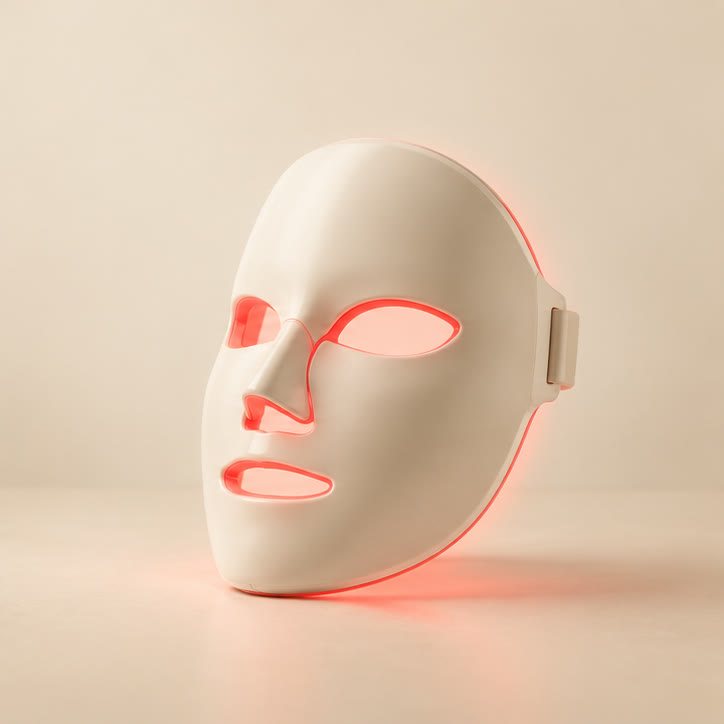
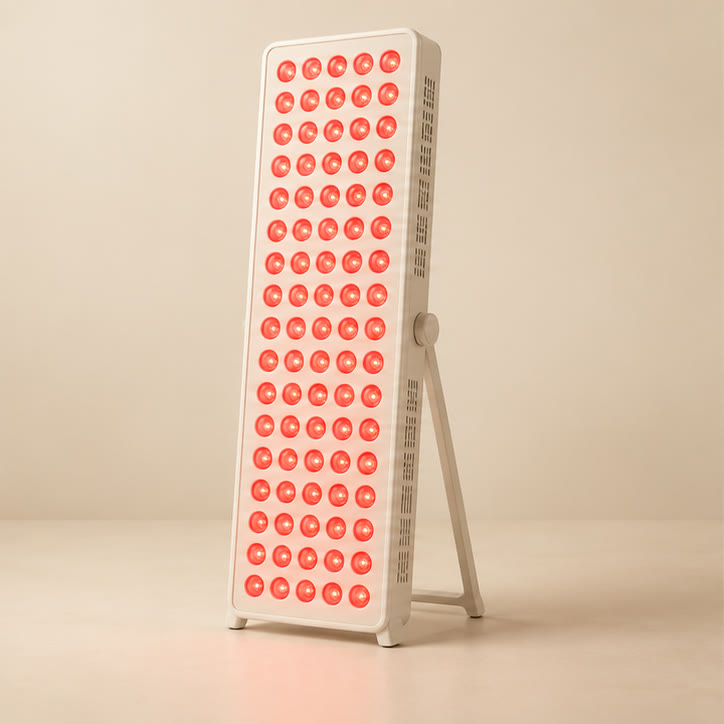
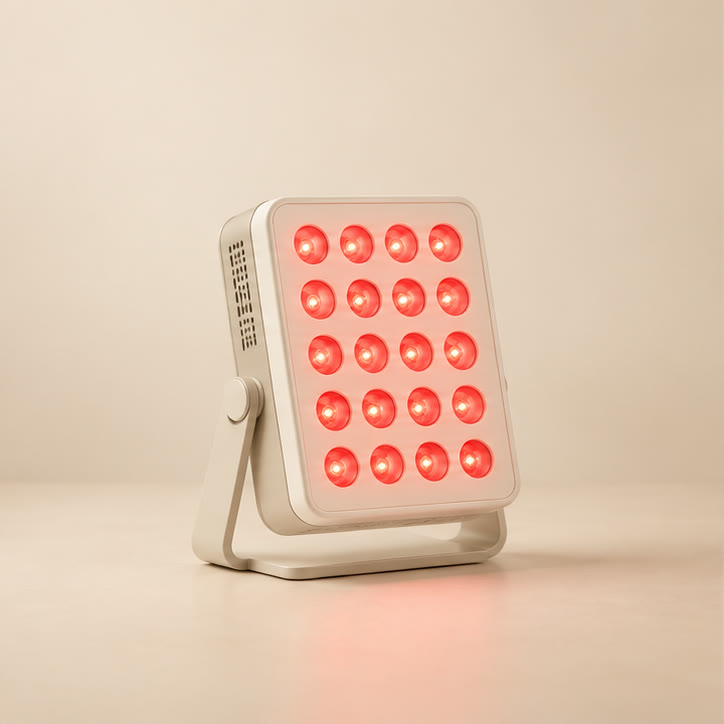
We're getting ready to sell three light devices, including the Ritual Mask at £199, which sits right over the face. Our instructions and eye guidance aren't final yet. Neither are our specifications. So this page isn't a promise about our products. It's what we found when we read the standards and the research on 19 October 2026, and what we'd do ourselves.
The answer is that it can be, if the device is designed and assessed properly and you use it as directed. There isn't one rule for every red light device, because what matters is how much light reaches the eye, for how long, and at what wavelengths. A dim LED panel across the room and a laser beam aimed into the pupil are completely different exposures, even though both get called red light.
That's why the most useful thing you can ask any seller, ourselves included, is not "is it safe?" but "how was it assessed, and what do the instructions tell me to do with my eyes?"
The relevant international standard for LED devices is IEC 62471, Photobiological safety of lamps and lamp systems. According to the IEC's own description, it gives guidance for evaluating the photobiological safety of lamps and lamp systems, and specifies exposure limits, a reference measurement technique and a classification scheme for photobiological hazards. Its scope covers electrically powered broadband sources of optical radiation, including LEDs but excluding lasers, from 200 nm to 3,000 nm.
Two parts of that are worth noticing.
First, it includes LEDs and the whole range that red and near-infrared light sits in. So it's the right document for panels and masks.
Second, it excludes lasers. Some devices sold as red light therapy use lasers, and they're assessed under different rules. If a product is described as using a laser, ask which standard it was assessed against.
A seller who has had their device assessed should be able to tell you so, and the result should shape the eye guidance in the manual. If a seller can't tell you anything about photobiological safety, that tells you something too. We cover the other documents worth asking for in our guide to reading device specifications.
When people search for red light and eyes, they often land on studies that sound reassuring or alarming without realising what was tested. Most of the eye research in the last few years is about one thing: repeated low-level red-light treatment for short-sightedness in children. That treatment uses a dedicated device that shines red light into the eyes under an eye specialist's supervision. It's not the same thing as a cosmetic panel or mask, where the goal is to avoid shining light into the eyes.
Still, that research is the closest thing we have to evidence on red light reaching the retina, so it's worth knowing what it found.
Tang and colleagues (2023) pooled 13 studies involving 1,857 children and adolescents. They found the treatment may slow the progression of myopia, and rated the evidence as low certainty, asking for larger and better randomised trials with two-year follow-up.
Lin and colleagues (2026) published a larger review this year, with 28 randomised controlled trials and 3,573 participants. On safety they reported that adverse events were mild and transient, with no consistent structural or functional abnormalities described. They also said longer-term trials with full retinal safety assessment are still needed.
So within a supervised clinical setting, the eye safety record in trials so far looks reasonable, and researchers themselves say it isn't fully settled.
Then there's the case that made headlines. Liu and colleagues (2023) described retinal damage in a 12-year-old girl with myopia after repeated low-level red-light laser exposure, in JAMA Ophthalmology. It's a single case report, so it can't tell you how often this happens. It does show that red light shone into the eye repeatedly can cause harm in at least some circumstances, and that's enough reason to take eye protection seriously.
None of this research supports using a cosmetic panel or mask on the eyes, or using any red light device on a child's eyes at home. If you're concerned about your child's eyesight, an optometrist is the person to see.
The other story that comes up is the Neutrogena Light Therapy Acne Mask. In July 2019, Health Canada posted a medical device recall for the mask and its activator. The listing says Johnson and Johnson GmbH made the voluntary decision to recall the products out of an abundance of caution, at the wholesale level and including retail for consistency.
That recall didn't establish that the mask injured anyone. What it did show is that a large manufacturer decided a face-worn light device needed to be withdrawn over caution about eyes. For anyone buying a mask today, it's a reminder that a mask sits a few centimetres from your eyes for every session, and the eye guidance in the manual isn't small print.
This is the practical bit. With a cosmetic device, here's what we'd do.
Read the manual first. Eye guidance should follow from how the device was assessed, so the manufacturer's instructions are the authority, not a forum thread or a video.
Wear the eye protection the manufacturer supplies or specifies. If goggles come in the box, use them. If the manual says eyes should be closed, close them.
Don't look into the LEDs, even briefly to check they're on. Some devices also emit near-infrared light, which you can't judge by eye, so how bright a panel looks tells you very little.
With a panel, face it as directed and keep to the stated distance. Our guide to planning a routine covers setting up a spot where the panel sits where it should every time, rather than wherever it ended up after the last session.
With a mask, check that it fits your face as intended and doesn't sit at an angle that changes where the light falls. Stop if anything feels wrong.
We'll put clear eye guidance in the manuals for the Ritual Panel, the Ritual Mini and the Ritual Mask once their assessments and instructions are final. If the instructions aren't published by the time you're ready to buy, wait.
The format you choose changes the eye question, so it's worth thinking about before you buy.
A mask is worn on the face. The LEDs are close to the skin around your eyes for the whole session, and the design of the eye area, whether it has openings, shields or solid cover, is decided by the manufacturer. You can't move further away from a mask. That's why the eye guidance for a mask has to be specific to that mask, and why we'd want to see it before buying.
A panel sits apart from you. You control the distance and the angle, which means you also control whether your face is in the light at all. If you use a panel mainly on your legs, back or arms, your eyes may be well out of the way. If you use it on your face, you're back to closing your eyes or wearing the protection the instructions specify, and keeping to the stated distance.
Neither format is automatically safer. A well-assessed mask with clear instructions can be a better bet than a panel used carelessly, and the other way round.
You don't need technical knowledge to ask good questions. These are the ones we'd send to any seller before buying a light device, and the ones we expect to be asked ourselves.
Has the device been assessed against IEC 62471, and can you share the result or the risk classification?
Does the device use LEDs or lasers?
What do the instructions say about eyes: open, closed, goggles, or shields?
Are goggles included, or do I need to buy them separately, and if so what kind?
Who does the manual say should not use the device?
What should I do if I notice eye discomfort or changes in vision?
A good seller will answer all of these in writing. If the answers are vague, or you're told not to worry about it, take that as your answer.
The risk with any routine is that it gets casual. The first week you read the manual carefully. By week six you're switching the panel on with one hand and checking your phone with the other.
A few habits help. Keep the goggles, if your device has them, on top of the device or hooked to it, so you can't start a session without picking them up. Close your eyes before you switch on, not after. Use a timer, on the device or your phone, rather than glancing at the panel to see how long is left. And if someone else in the house uses it, make sure they've read the eye section too.
Stop using any light device and speak to an optometrist, pharmacist or GP if you notice eye discomfort, blurred or changed vision, spots or patches in your vision, a lingering after-image, headaches during or after a session, or anything else that worries you. Don't carry on to see whether it settles.
If you have sudden changes in vision, that's not something to sit on. Contact NHS 111 or an urgent eye service.
Some people should speak to a professional before using any red light device near the face, ours included.
Anyone with an existing eye condition, including retinal conditions, or who has had eye surgery should check with an optometrist or ophthalmologist first.
Anyone taking a medicine that can make you more sensitive to light should ask a pharmacist. The patient leaflet usually says if this applies.
Anyone with a condition affected by light should check with their GP. The NHS page on lupus, for example, advises against spending a lot of time in rooms with fluorescent lights.
Anyone who is pregnant should ask their midwife or GP. None of the reviews we read covered pregnancy.
Children shouldn't use a cosmetic panel or mask. The red light eye research in children was carried out under specialist supervision with specific devices.
For balance, the research on using red light on the face reports few problems overall. Das and colleagues (2026), in a systematic review of eight at-home LED studies for the face with 365 participants, found adverse events were infrequent, mild and transient. That's encouraging. It isn't the same as saying eyes are never at risk, and those studies used their own devices with their own instructions.
If you want to use red light to improve your eyesight, treat dry eye or manage any eye condition, a cosmetic panel or mask isn't for you, and we won't sell one on that basis. See an optometrist.
If you're not willing to wear eye protection or keep your eyes closed when the instructions say so, please don't buy a light device. The risks aren't worth it for a cosmetic routine.
We'd rather tell you what we don't know than paper over it. We don't yet have final assessments, specifications or eye guidance for our devices. Before we sell them, we want clear answers on photobiological safety and instructions that tell you exactly what to do with your eyes, written in plain English. That's the minimum you should expect from anyone.
When you're comparing devices in the meantime, our page on panels versus masks explains how the two formats differ in where they sit relative to your face. And when the Ritual Mask and its siblings are ready, their eye guidance will be on the product pages before anything else is.
It depends on the device, the light level and how you use it, so follow the manufacturer's eye guidance and ask whether the device has been assessed against IEC 62471. Eye research is mostly about a different, clinical use: low-level red laser for children's short-sightedness. A 2026 meta-analysis by Lin and colleagues found adverse events there were generally mild, but called for longer trials with full retinal safety checks.
Do what the device's instructions say. For a cosmetic panel or mask, we would keep eyes closed or use the eye protection the manufacturer specifies, and never stare into the LEDs. Our own instructions are not final yet, and we will publish them before launch.
If the manufacturer supplies or recommends goggles, wear them. Whether they are needed depends on how the device was assessed under the photobiological safety standard, which is why that documentation matters more than a general rule.
There are reports of harm with some devices. Liu and colleagues described retinal damage in a 12-year-old after repeated low-level red-light laser treatment for myopia, published in JAMA Ophthalmology in 2023. That was a laser aimed into the eye, not a cosmetic LED panel, but it shows why eye safety deserves care.
We make no such claim. Studies of red light for children's myopia are clinical treatments run by eye specialists. Tang and colleagues rated the evidence in 2023 as low certainty. If you are worried about your or your child's eyesight, see an optometrist.
How to read a red light therapy spec sheet: wavelength, irradiance and its distance, beam angle, flicker, EMF claims, IEC 62471, UKCA or CE and warranty.
Plan a red light therapy routine you will keep: where the device lives, time of day, following the instructions, eyes, cleaning and when to ask a GP.
Red light panel or LED mask? How to choose a format by the space you have, where it will sit, the areas you want to cover and the routine you will keep.