Loading…
If you're shopping for an LED face mask in the UK, the market is crowded, prices vary a lot, and the adverts don't always play by the rules. This LED face mask UK buying guide is the checklist we'd use ourselves. It covers which claims a UK seller isn't allowed to make, what markings do and don't mean, what the trials on masks found, how to think about your eyes, and what the law says about sending one back.
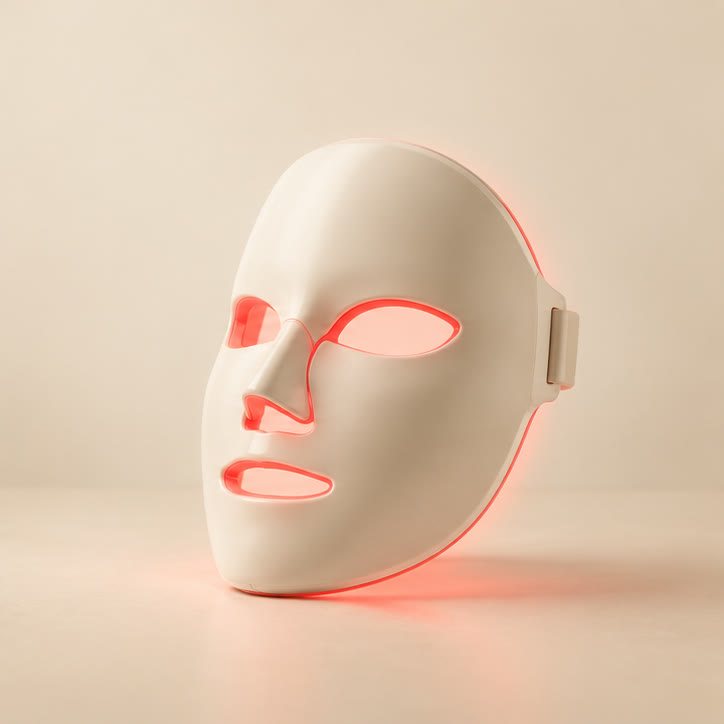
We sell a mask, the Ritual Mask at £199, and we've written this knowing you might use it to rule ours out. That's fine. One thing to know up front: our mask's specifications aren't confirmed yet, so we can't tell you its wavelengths, its output, its weight or what's in the box. Hold us to the same checklist when those details are published.
Here's the short answer for anyone in a hurry. Before buying any LED face mask in the UK, check five things. The seller shouldn't claim it treats a medical condition. The product should carry the conformity marking it needs and the seller should be able to explain it. The light output and wavelengths should be stated with measurement conditions. The manual should cover eyes, and ideally mention an assessment against IEC 62471. And you should know exactly how to return it within your 14-day cancellation period.
The rest of this page goes through each one.
This is the quickest way to judge a seller, and it's the one most people skip.
In the UK, the line between a cosmetic product and a medical device is drawn by what the product is for. GOV.UK guidance on medical devices lists purposes such as the diagnosis, prevention, monitoring, treatment or alleviation of disease, and says all medical devices on the Great Britain market must be registered with the MHRA. So a mask sold to treat acne, rosacea or any other condition is being presented as a medical device, whether the seller means it or not.
The Advertising Standards Authority has been enforcing this. On 5 November 2025 it ruled against an advert and web page for an LED mask sold by Beautaholics Ltd. The ad called the light therapy "clinically proven" for conditions including acne, and the website mentioned acne and rosacea. The ASA said those claims implied the mask could treat or prevent medical conditions. The mask had a conformity marking but wasn't registered with the MHRA, so the ASA said no medicinal claims could be made for it. The complaint was upheld.
What this means for you as a buyer: if a mask's advert promises to clear acne, heal scars or fix a skin condition, either the product is a registered medical device (ask for proof) or the seller is breaking advertising rules. Neither situation is a reason to trust the claim more.
We don't make any condition claims for the Ritual Mask. It's a cosmetic device, and if you have a skin condition we'd point you to a GP or pharmacist, not to us.
You'll see UKCA, CE or both on most electrical products sold here. GOV.UK guidance says these markings show that the manufacturer believes the product meets the relevant product requirements. It also says the UK continues to recognise CE marking alongside or in place of UKCA for many products, following the Product Safety and Metrology (Amendment) Regulations 2024.
Two things follow from that wording. A marking is a declaration about meeting product rules, like electrical safety. It isn't a test of whether the mask does anything for your skin. And a marking isn't the same as MHRA registration, as the Beautaholics ruling shows.
So the questions to ask a seller are simple. Which marking does the mask carry? Which rules does the declaration cover? Is there a declaration of conformity you can see? A seller who can't answer those probably doesn't know who made the product.
A mask is a set of LEDs held close to the face. What matters is what light comes out and how much of it reaches your skin, and that's where most listings get vague.
The trials that found something were specific about this. Park and colleagues (2025) used a mask combining red LEDs at 630 nm with near-infrared at 850 nm. Bragato and colleagues (2025) used a red mask at 660 nm and reported the output and dose in full. Those numbers describe their devices, not ours, and not any mask you might buy. The point is that researchers publish them, so sellers can too.
Look for wavelengths in nanometres, an output figure in proper units with the distance it was measured at, and the treatment time the manufacturer recommends. LED counts and electrical wattage aren't the same as measured light at your skin. Our guide to reading device specifications covers this in more depth, including why two output figures measured at different distances can't be compared.
We'll be blunt about our own position. The Ritual Mask's light specifications aren't confirmed, so they aren't on the product page. When they are, they'll be there with the measurement conditions, and if they aren't there when you're ready to buy, wait.
Masks sit right over the eyes, which is why eye safety deserves its own check.
The case that put this on many people's radar was a recall. In July 2019, Health Canada posted a medical device recall for the Neutrogena Light Therapy Acne Mask and its activator. The listing says Johnson and Johnson GmbH made a voluntary decision to recall the products out of an abundance of caution. That recall didn't prove harm, but it showed that even a large company decided the risk to eyes needed rethinking.
What you can do as a buyer is ask two things. First, has the mask been assessed against IEC 62471? That's the international standard for the photobiological safety of lamps and lamp systems, and its scope covers LEDs across 200 to 3,000 nm. Second, what does the manual say about eyes: should they be closed, are eye shields or goggles supplied, and who should avoid the mask?
If you have an eye condition, take medicines that make you sensitive to light, or have had eye surgery, talk to an optician, pharmacist or GP before using any light mask. That's the same advice we'll put in our own documentation.
A few things on a listing would make us close the tab, whatever the price.
Percentages with no source. If a page says a mask improves wrinkles by a big round number, look for the study. If there isn't a link, or the link goes to the seller's own survey of customers, treat it as marketing.
Before-and-after photos with different lighting. Skin looks smoother in soft light, with make-up, from a slightly different angle. You can't learn anything from a pair of photos you can't check.
No company address or UK contact. You'll want someone to speak to if the controller fails in month three. If the only contact route is a chat window, think twice.
Condition words dressed up as cosmetic ones. The ASA ruling above shows that phrases about acne still count as medical claims, even when the seller says they're cosmetic. A seller who leans on those words is taking a risk with the rules, and with you.
A manual you can't see before you buy. A decent manufacturer will happily share the instructions, warnings and cleaning guidance in advance. We'll put ours online when it's final.
Buying guides tend to skip the evidence, and science pages tend to skip the buying. Here's the bit you need for a purchase decision.
Masks have been tested in proper trials. Park and colleagues (2025) ran a randomised, double-blind study with a sham mask in 60 adults and found crow's feet scores improved more with the active mask at 8, 12 and 16 weeks. Bragato and colleagues (2025) tested a red mask on 95 women and found no difference on a specialist wrinkle scale, but shorter measured lines in some areas and higher satisfaction than the sham group, at 79.6% and 73.4% in the two active groups.
The broader picture comes from Das and colleagues (2026), whose systematic review of at-home LED devices for the face included eight studies and 365 participants. They found improvements in wrinkles, texture and elasticity, with infrequent, mild and short-lived side effects, and called for larger, standardised trials with more diverse skin types.
So a fair buyer's summary is this: an LED mask may help the look of fine lines over a couple of months, in trials of a few dozen people each. That's worth knowing before you spend money. It's also why we don't put before-and-after photos or percentages on our product pages. We have no trial of our own.
These things don't appear in studies, but they decide whether you'll still be using a mask in March.
Think about how it's held on. Straps, a headband, or a rigid shell you hold in place all feel different, and some people with glasses or a larger head find certain designs press on the nose or ears.
Think about the eye openings. Some masks have cut-outs and some cover the eyes completely. Neither is automatically safer; it depends on how the device was assessed. Ask.
Think about cleaning. A mask touches skin, so you'll want to wipe it after use. Check what the manufacturer says to clean it with, and stick to that. We'll publish cleaning instructions for the Ritual Mask in its manual once it's final.
Think about where it lives. A mask is small enough for a drawer, but the cable and controller need somewhere too. Our guide to planning a routine has some ideas about setting up a spot you'll actually use.
A mask is a face-only device. If you're also curious about light on your neck, chest or hands, a panel might suit you better, and our comparison of panels and masks goes into the trade-offs.
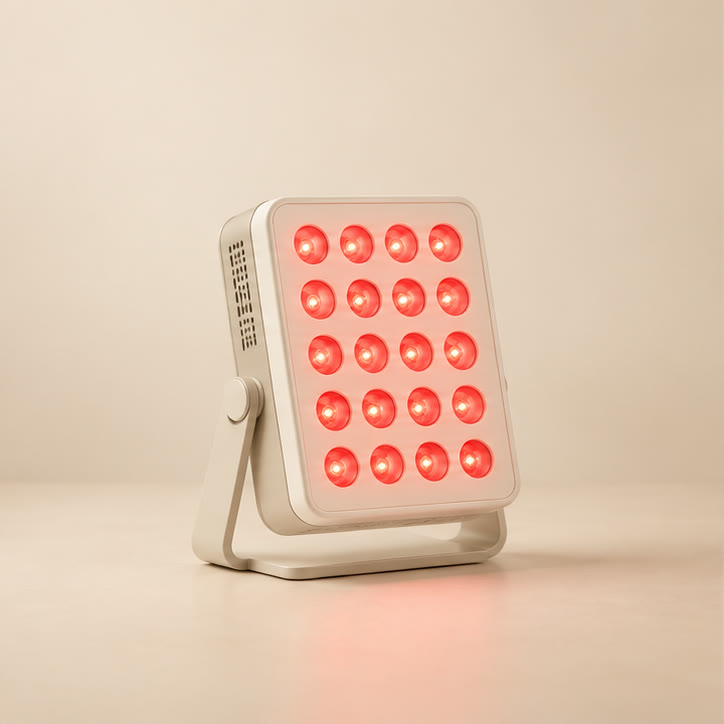
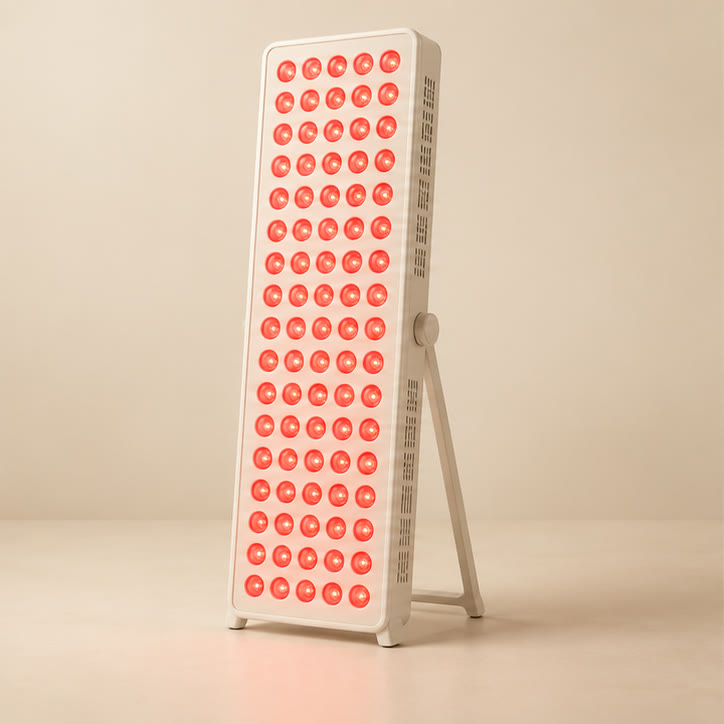
Our range is simple. The Ritual Mask is £199. The Starter Ritual pairs it with the compact Ritual Mini for £429, and The Full Ritual pairs it with the full-size Ritual Panel for £759. Delivery is free and tracked on orders over £100, which covers all of those. We won't tell you a set works better than a single device, because there's no evidence for that. It's about where you want to use light.
Every mask on this list should come with a clear returns route, because some people only find out a mask doesn't fit their face once it's on.
The Consumer Contracts Regulations 2013 set the rules for online purchases. For a straightforward order of goods, regulation 30 says the cancellation period ends 14 days after the day the goods come into your physical possession. We offer the UK and EU 14-day right to cancel on every order. Before you buy from anyone, find out how they handle a return of a device that touches the face, who pays postage and how long a refund takes.
An LED face mask is not for you if you're hoping to treat acne, rosacea, eczema, pigmentation problems or any other skin condition. See a GP or pharmacist, who can prescribe things with stronger evidence.
It's not a good idea without advice if you're pregnant, have epilepsy or a condition triggered by light, have an eye condition, or take a medicine that makes you sensitive to light. Your GP or pharmacist can tell you whether it's sensible for you.
And it's not for anyone who wants a guaranteed change by a set date. The trials we read ran for weeks and the results varied.
If we were buying an LED face mask in the UK today, we'd start by ignoring any listing that promises to treat a condition. We'd look for stated wavelengths and measured output, ask about IEC 62471 and read the eye safety section of the manual before paying. We'd check the marking and ask for the declaration. We'd try the mask on as soon as it arrived and use the cancellation period if it didn't fit.
That's the standard we're setting for the Ritual Mask. Its specifications will go on the product page once they're confirmed, and not before.
Yes, as cosmetic or general consumer products. What changes things is the claim. GOV.UK guidance says a product intended for the treatment or alleviation of disease is a medical device and must be registered with the MHRA, and in November 2025 the ASA ruled against an LED mask advert that mentioned acne and rosacea because the mask was not MHRA-registered.
There is some evidence for the look of fine lines, but it is limited. A 2026 systematic review by Das and colleagues found eight studies of at-home LED devices with 365 participants in total, reporting improvements and mild side effects, while asking for larger and more standardised trials.
Check the manual and the safety assessment before you buy. In 2019 Health Canada listed a voluntary recall of the Neutrogena Light Therapy Acne Mask, which the company made out of caution. Ask whether a mask has been assessed against IEC 62471, the standard for photobiological safety of lamps including LEDs, and speak to an optician or GP if you have an eye condition.
GOV.UK says UKCA and CE markings show the manufacturer believes the product meets the relevant product requirements. The UK continues to recognise CE marking for many products. A marking is not the same as MHRA registration as a medical device, and it does not prove any skin result.
The Ritual Mask is £199. It is also part of The Starter Ritual with the Ritual Mini for £429, and The Full Ritual with the Ritual Panel for £759. Its specifications are not confirmed yet, so we are not publishing wavelengths, output or box contents until they are.
Under the Consumer Contracts Regulations 2013, for most goods bought online the cancellation period ends 14 days after the day the goods come into your physical possession. Our orders carry the UK and EU 14-day right to cancel.
How to read a red light therapy spec sheet: wavelength, irradiance and its distance, beam angle, flicker, EMF claims, IEC 62471, UKCA or CE and warranty.
Red light panel or LED mask? How to choose a format by the space you have, where it will sit, the areas you want to cover and the routine you will keep.
Plan a red light therapy routine you will keep: where the device lives, time of day, following the instructions, eyes, cleaning and when to ask a GP.